Our storyDari arkib
The research binder: learning from what worked
Around 2016 we studied popular worksheets in a ring binder and sketched our own. Some ideas grew into today's printables. One, a map of the names of Allah, was too heavy for class.
Around 2016, our research happened in a ring binder. It was still very much pen and paper, and we were designing everything from scratch with simple desktop publishing tools.
We bought worksheets on Teachers Pay Teachers (TPT), where teachers sell their printables, and looked closely at the ones that sold well: the formats that parents and educators kept coming back to. We printed them as pages of small thumbnails and went through them with a highlighter and a pen. The aim was to learn from the formats that worked and then make original IqraSaurus printables of our own.
Our notes are in the margins: "Tactile learners: make a face & give it a name", "Feelings", "automatic puzzle maker based on alphabets". Along the bottom of that page are our own plans, Set A to Set E. Set A lists seven layout types, from one per page to fill in the blanks. Set B is Juz Amma one-pagers. Set C is Asma ul Husna, all 99 names. Set D is a train match, and Set E a monster hand.
Our own pages
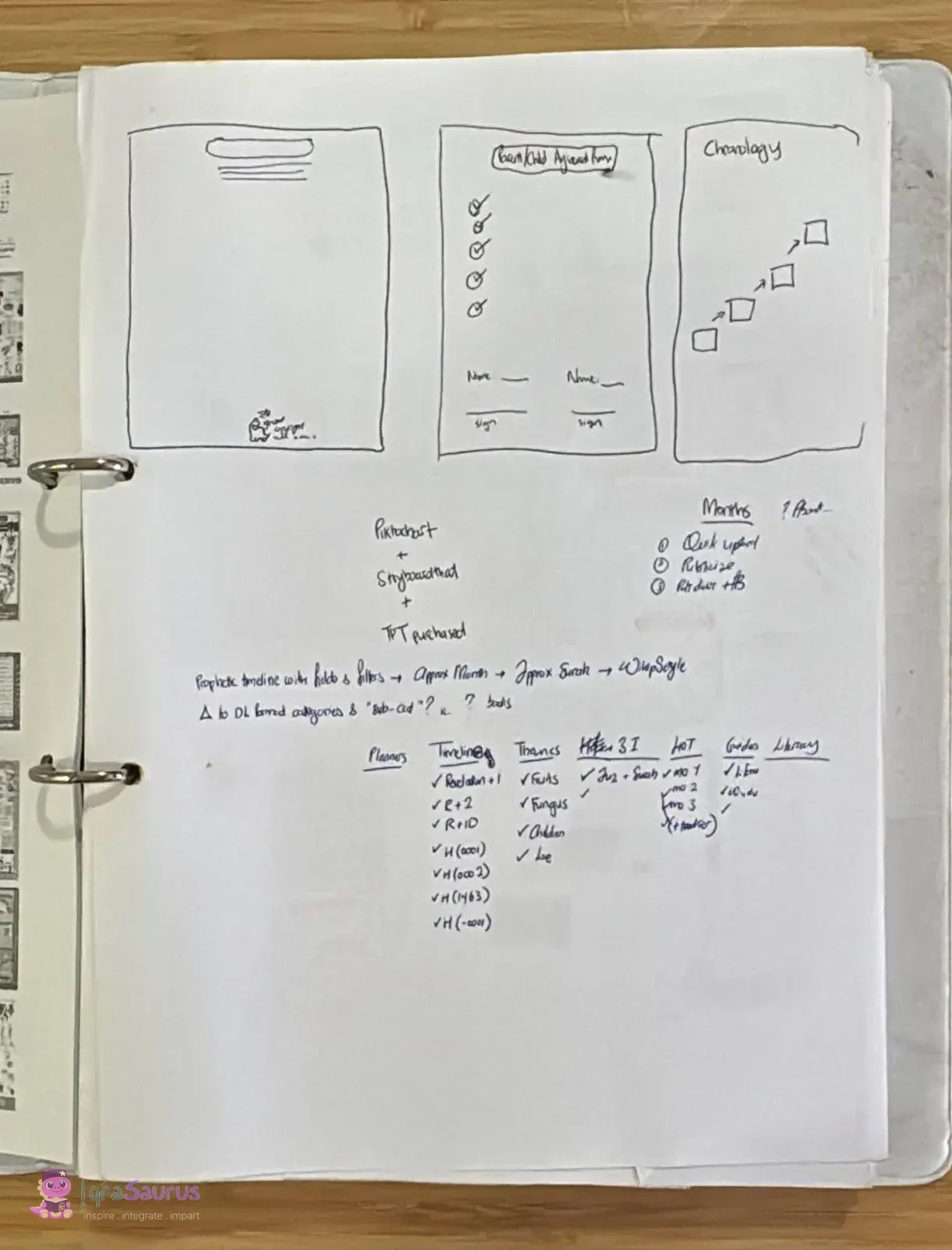
Another page is all ours. It has three page sketches (a cover, a Parent/Child Agreement form and a chronology), the tools we planned to use ("Piktochart + Storyboard That + TPT purchased"), and an idea for a prophetic timeline with fields and filters. Across the bottom is a row of headings for what we wanted to build: Planners, Timelines, Themes, 3I, HOT, Guides, Library. 3I was our framework then: Inspire, Integrate, Impart.
Sticky notes and feedback
Our programmes grew the same way, bit by bit. After each one we ran there was feedback for the next, and the next. Much of it was sorted on sticky notes and written notes. One curriculum map groups the notes under Quranic literacy (surahs, du'a, asmaul husna), Arabic literacy (letters, finger tracing, first words, decoding messages), science (life cycles, parts of the body, maps) and maths.
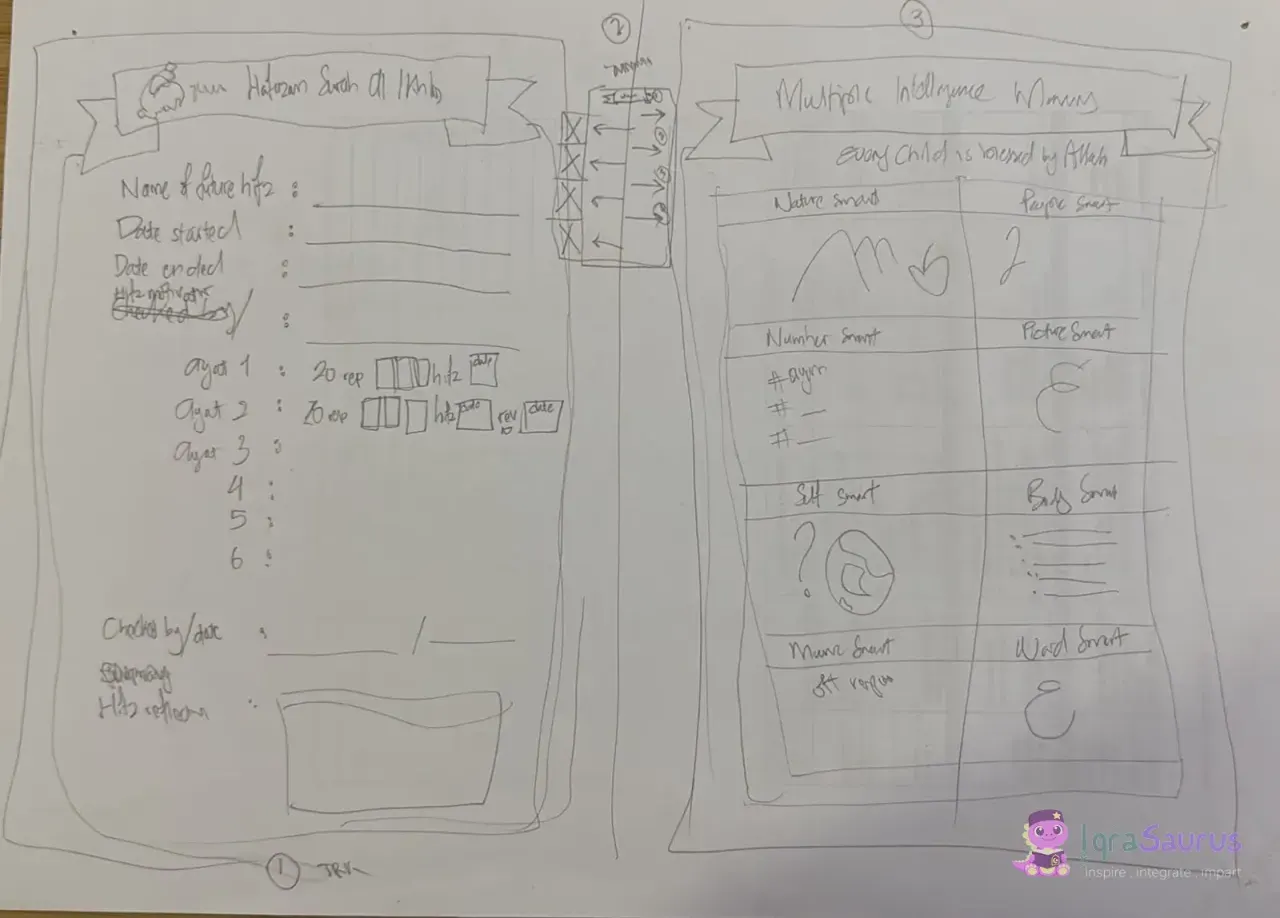
Pencil sketches show a hifz tracker for Surah Al-Ikhlas, with space to count the repetitions for each verse and a box for the child's own hifz reflection, and a Multiple Intelligence map headed "Every child is blessed by Allah".
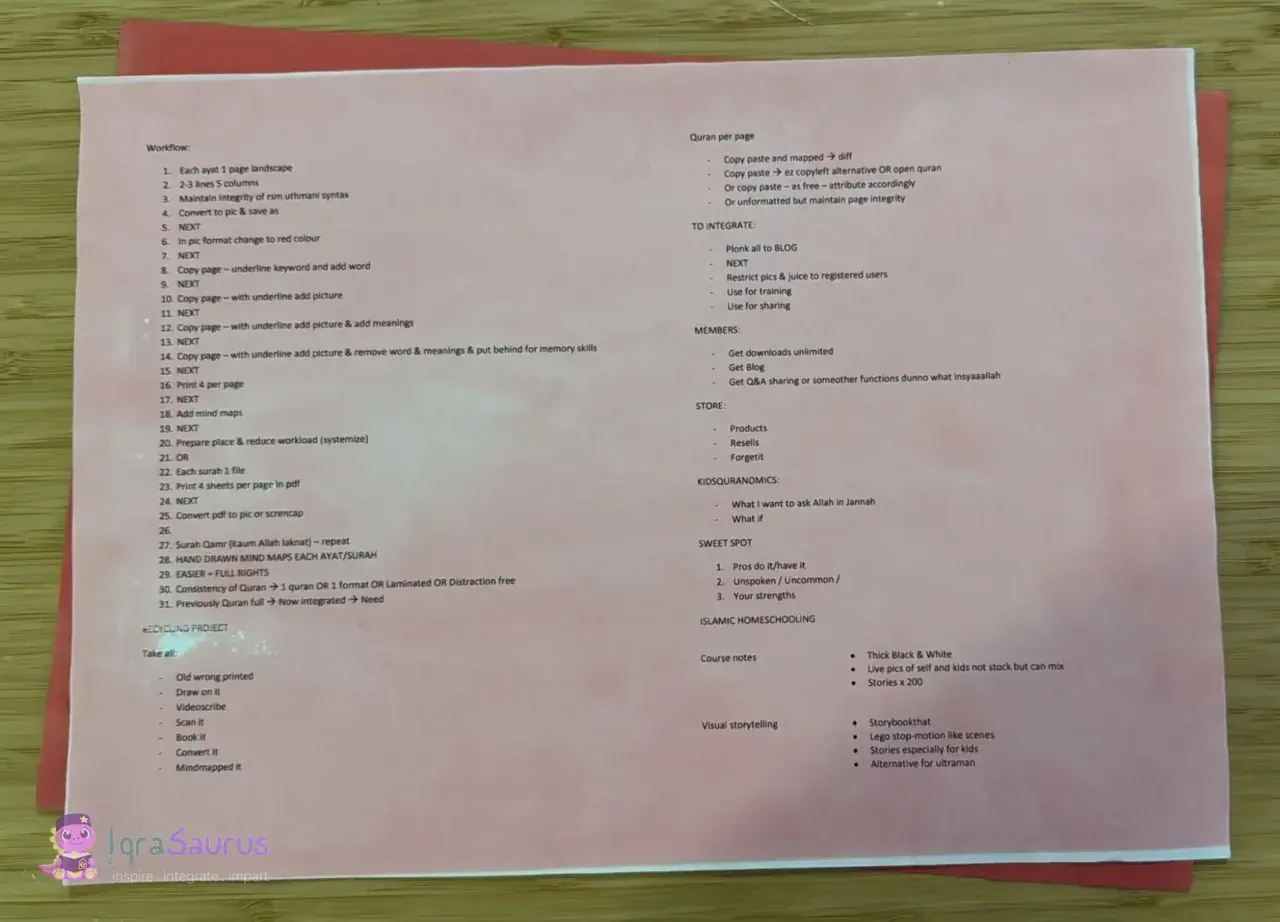
A typed workflow on pink paper lists 31 steps for making one-verse-per-page printables: keep the Uthmani script intact, underline a keyword, add a picture and the meaning, then remove them again for memory practice.
The map that was too heavy
Not everything worked. We tried to sort the names of Allah into four groups on one page, with Allah at the centre and two lines across it: one running from self to others, the other from not obvious to obvious. We hoped this would make the names easier to remember, internalise and share.
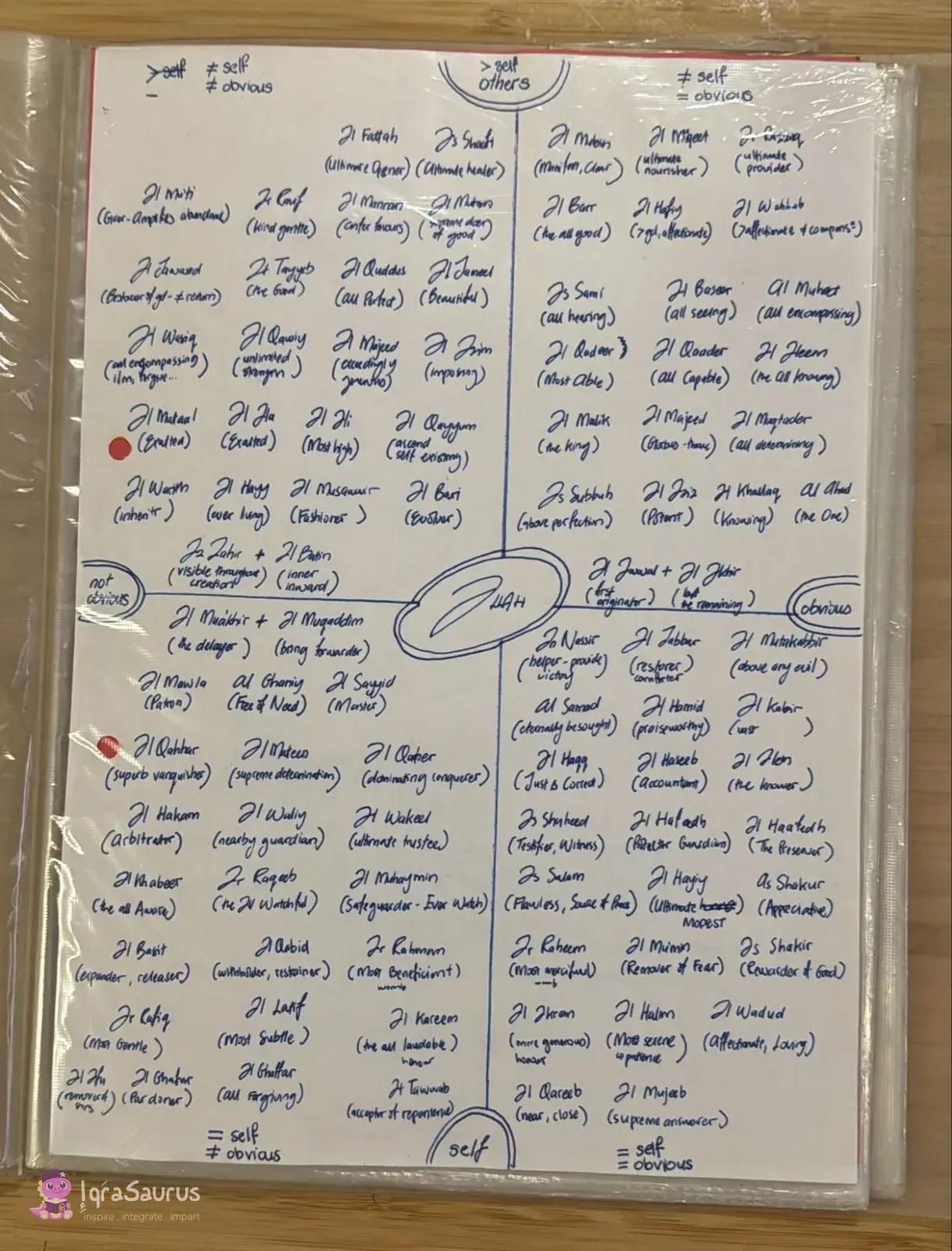
In class it did not come across well. It is a heavy topic, and the people who came to our classes had very different levels of knowledge. So we went back to simpler steps that need to come first. That work now lives in the Asmaul Husna app and in our entry-level printables, a gentler way in to loving Allah through His beautiful names.
We are open about this. Most of our programmes do not make money; they break even. We wanted our own children to benefit first, and we built things so that others could benefit too.