PartnersDari arkib
Eight ways into every surah: our planning with Little Caliphs
With Little Caliphs in Malaysia, we planned reflection activities for the short surahs of Juz Amma: eight activities for each surah, each matched to a different way children learn.
Little Caliphs is a large early-childhood organisation in Malaysia, with centres in every state. Around 2019 we worked with them on Tadabbur pages for the short surahs of Juz Amma. Their teachers wrote the tafsir. We wrote the reflection part: what a young child does with a surah after hearing what it means.
The finished books belong to Little Caliphs, so they are not shown here. What you see below is our side of the work: the planning, the drafts and the cards we tried out.
For us the project was about reflection: helping very young children think about what a surah means for them, beyond the basics of fardhu ain that every child learns first.
One surah, eight ways in
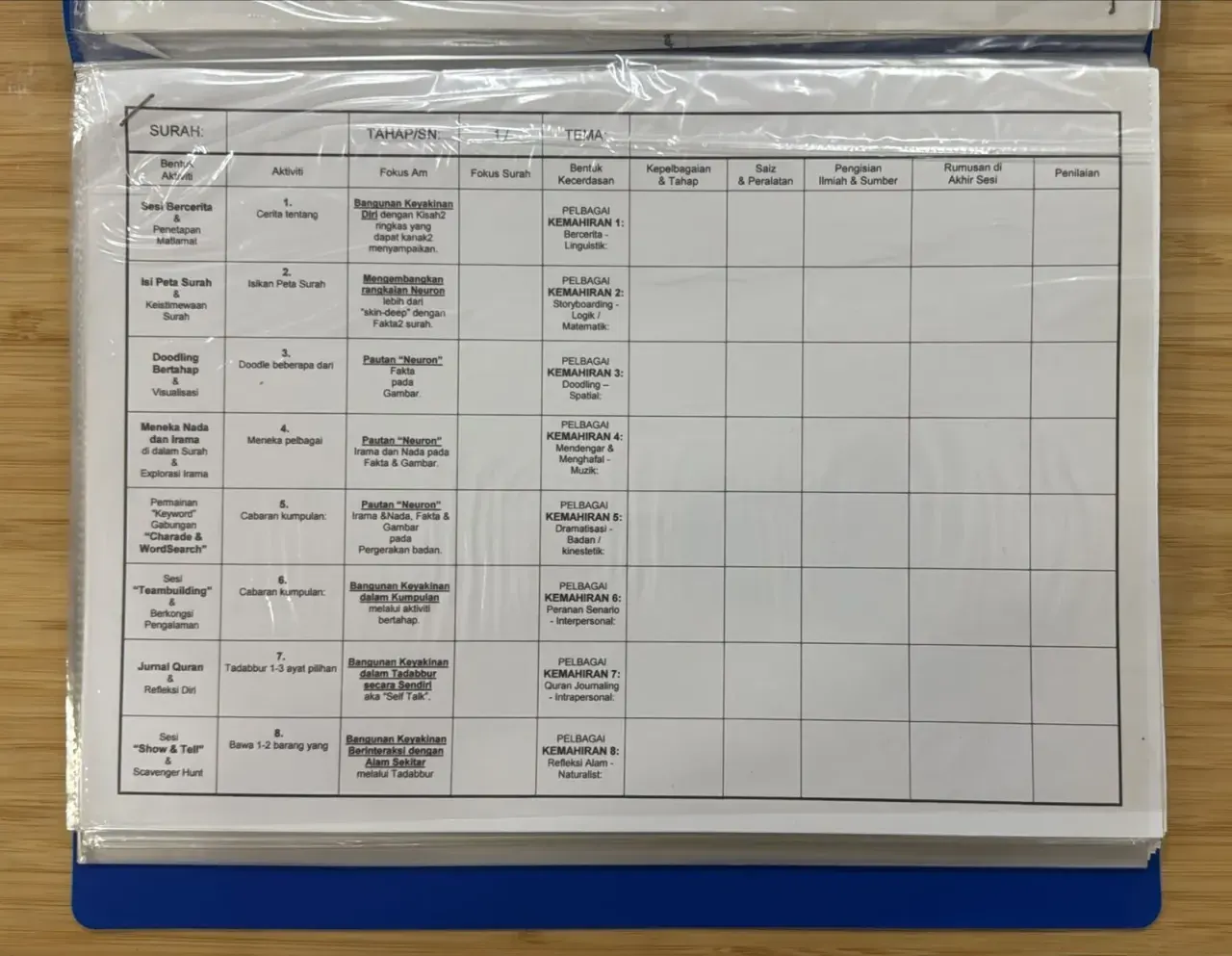
Every surah got eight activities, and each activity was matched to a different way children learn. We drew it up as a grid: one row per surah, from Al-Fatihah onwards, and one column for each way of learning. The columns were storytelling, logic and maths, doodling, rhyme, charades and crosswords, teamwork, writing your own thoughts, and show and tell.
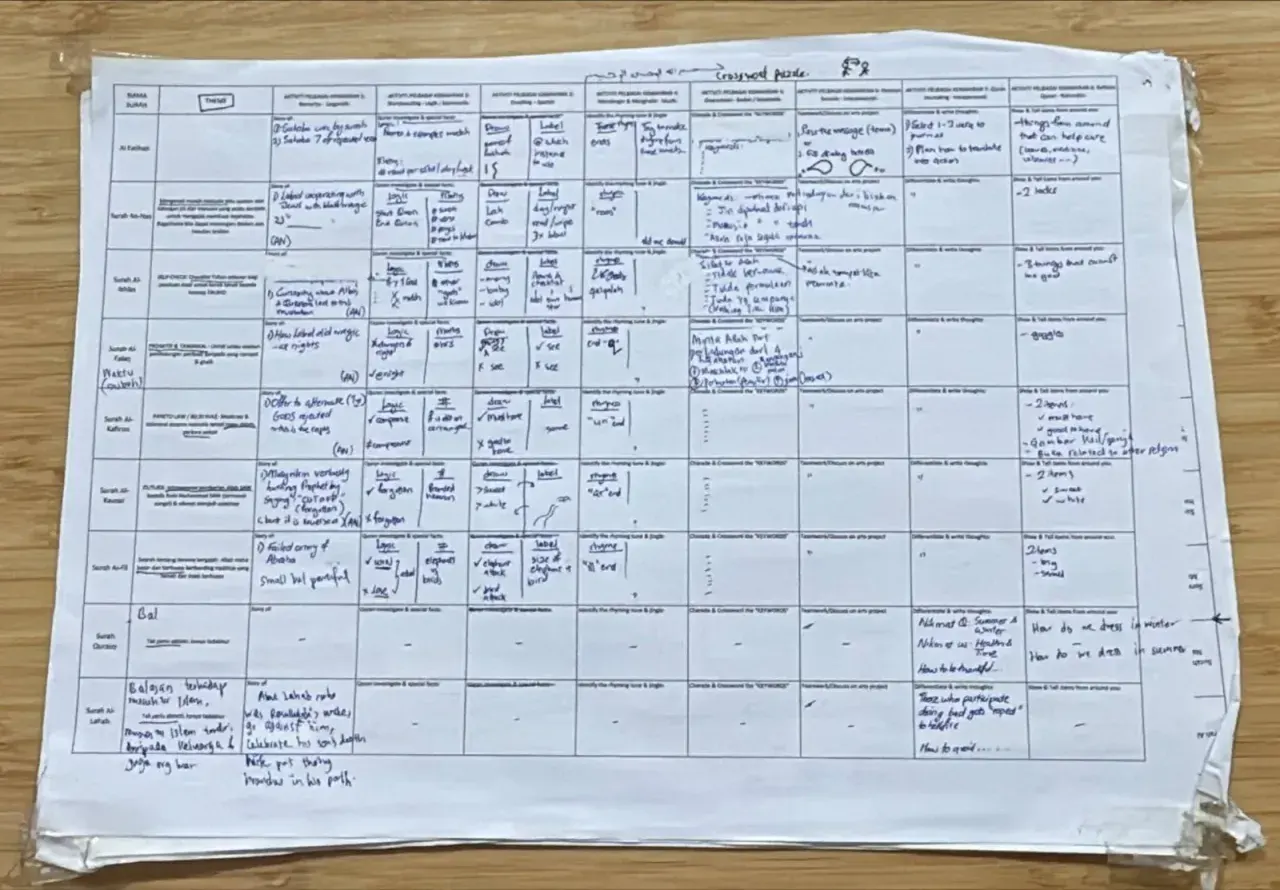
Some boxes filled up quickly. For Surah Al-Fil, the story box reads "Failed army of Abraha" and "small but powerful", and the show-and-tell box asks for two items, one big and one small. Other rows are still mostly empty, which is how a plan looks halfway through.
Before the grid
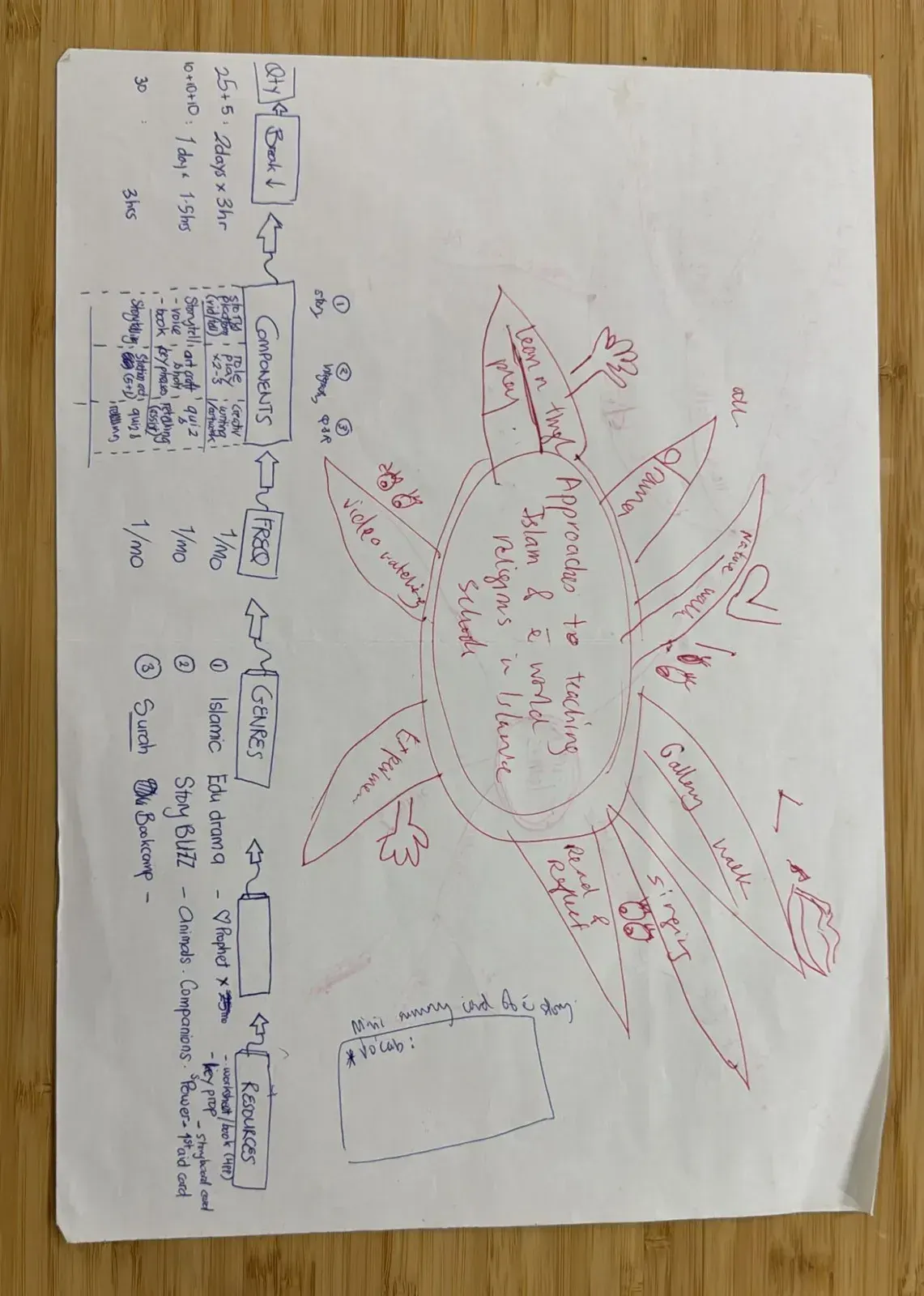
The grid grew out of earlier thinking on paper. One mind map asks how Islam can be taught in Islamic schools: through play, drama, nature walks, gallery walks, singing, reading and reflecting, experiments and videos. The same page lists our own formats, Islamic EduDrama, StoryBuzz and the Surah Bookcamp, with how often each could run and for how many children.
We also set the plan out in Malay for the Little Caliphs teachers. Here each activity has a name and an aim: a storytelling session with goal-setting, filling in a surah map, doodling step by step, guessing the tune and rhythm of the surah, a keyword game of charades and word search, team-building, a Quran journal on one to three chosen verses, and show and tell with a scavenger hunt.
A lesson plan for each activity
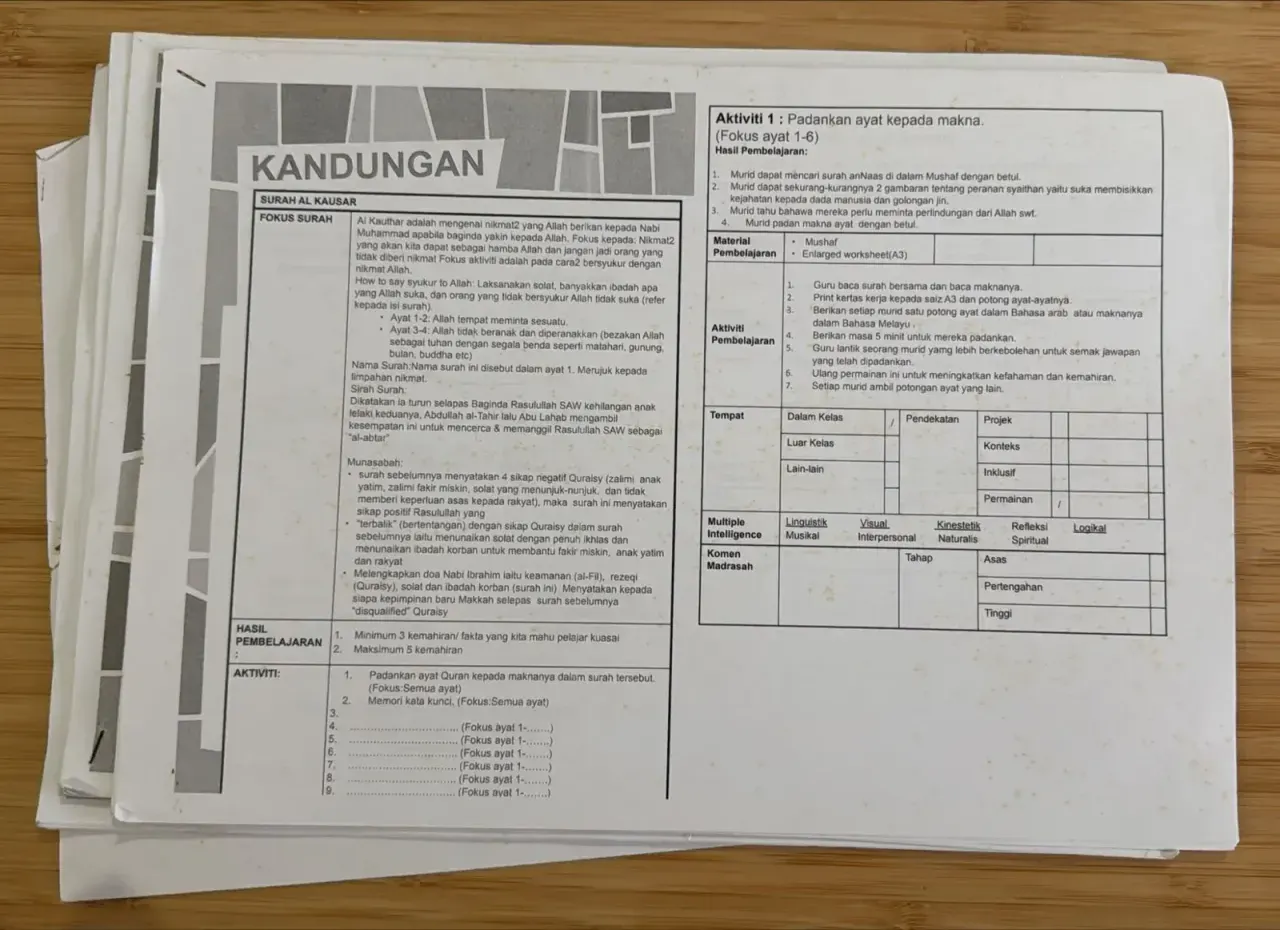
Each activity then got its own plan. This draft is for Surah Al-Kautsar. The left page sets out the focus of the surah, the background to its revelation, how it links to the surah before it, and the list of activities. The right page plans Activity 1, matching each verse to its meaning: the materials, the steps, where it takes place, and a checklist of the intelligences it uses, with space for the madrasah to comment.
Station cards for Al-Fatihah
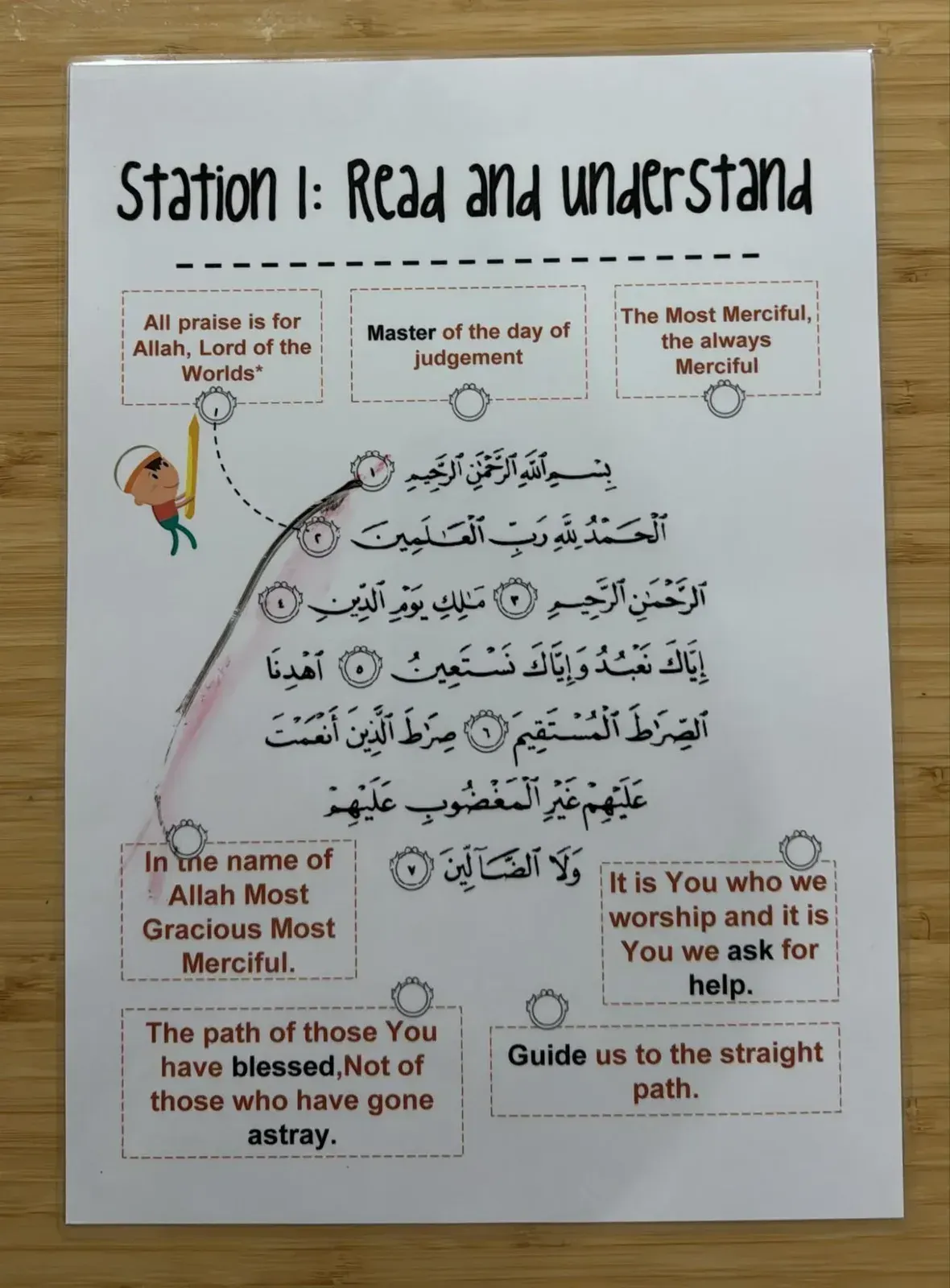
For Surah Al-Fatihah we made laminated station cards, one for each activity. At Station 1, children read the surah and draw a line from each verse to its meaning. Someone has already tried it in marker.
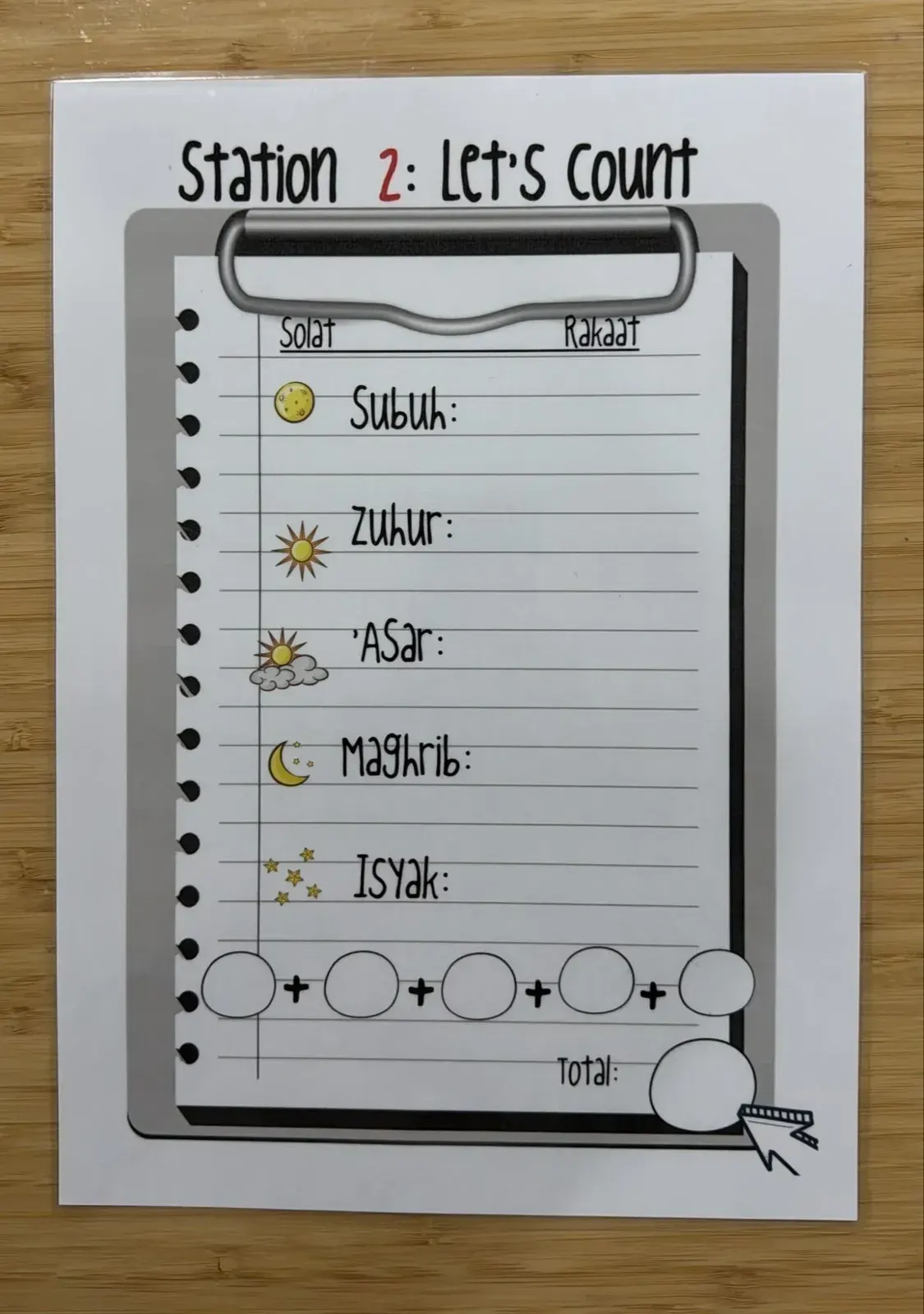
Station 2 is a counting card. Children write down how many rakaat each of the five daily prayers has, then add them up.
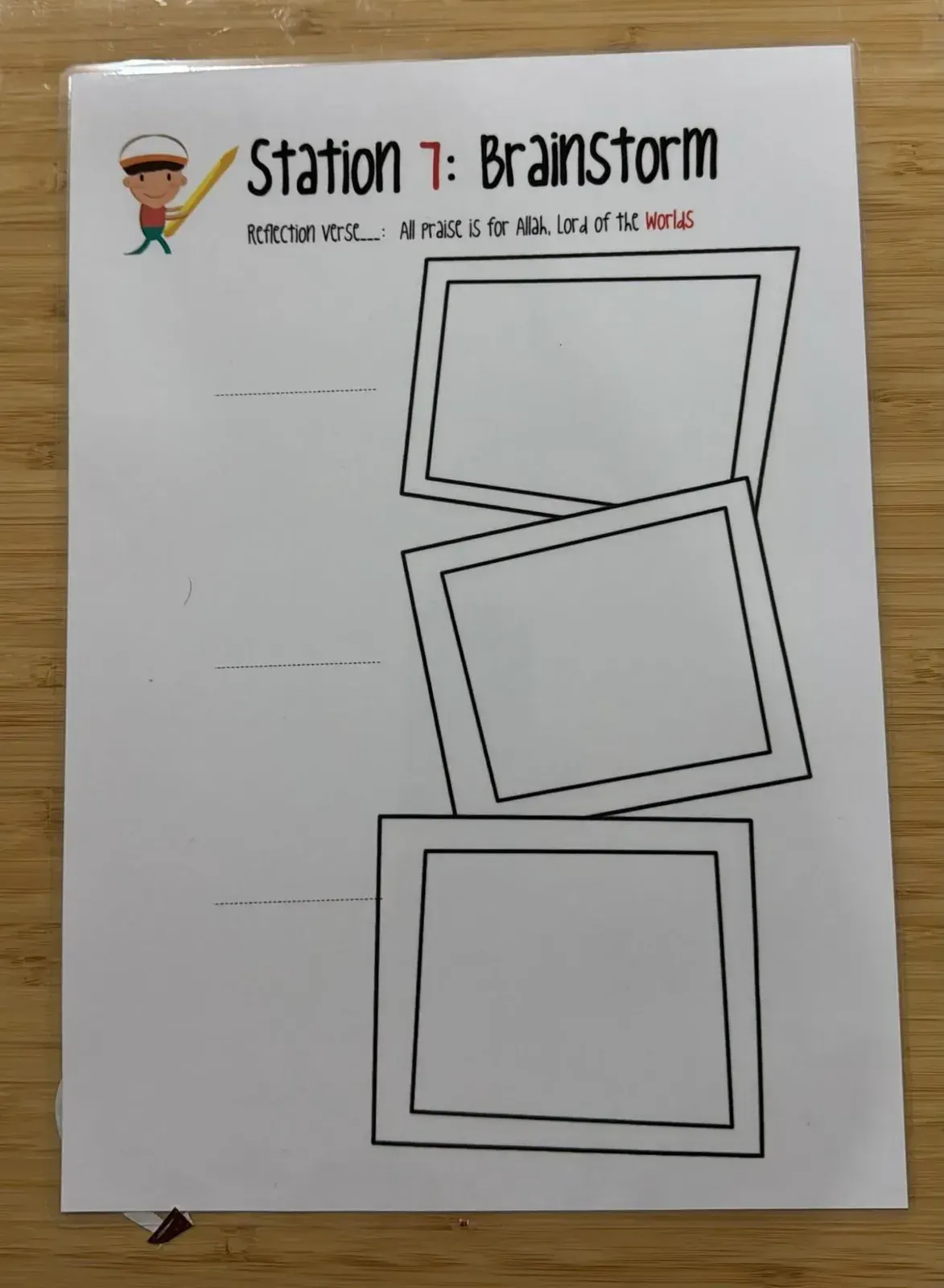
Station 7 is for brainstorming in pictures. Children take one verse for reflection and draw what it brings to mind in three frames.
Working with a partner
This was a long piece of work, with several rounds of drafts and some very different versions along the way. Their team read what we sent closely and wrote back with detailed notes, and we revised.
Working with Little Caliphs was humbling. It taught us how to collaborate on something new. It also became a friendship: we are still in touch, and they are still looking for ways for us to work together. We visited them at home to understand what they do. For our children it was an eye-opener to see what someone successful, living the values of tadabbur, looks like in real life.
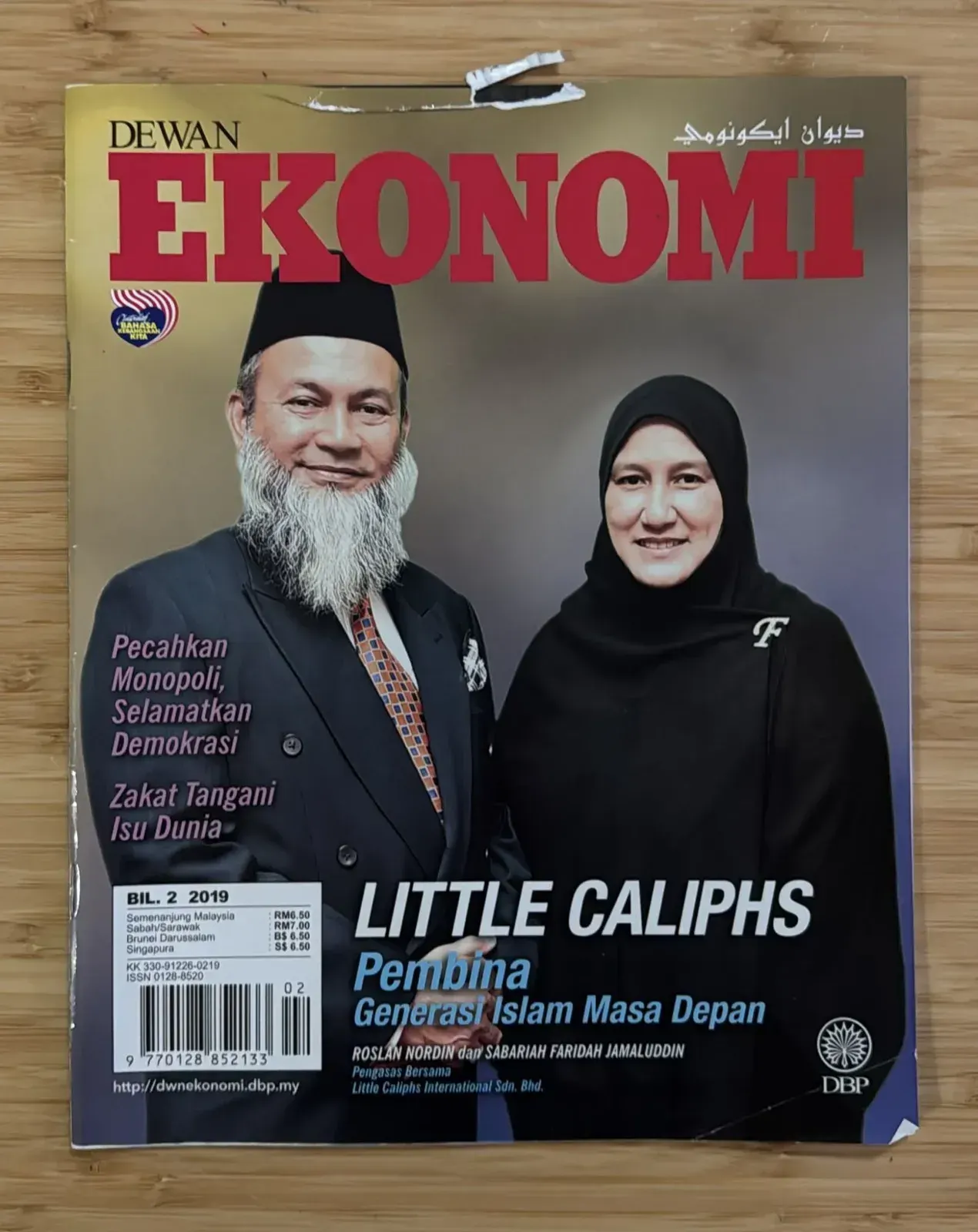
In 2019 the Malaysian magazine Dewan Ekonomi put Little Caliphs and its two co-founders on its cover. The article is about them, not about us. We keep it as a record of the partner we worked with.