Our storyDari arkib
Black-and-white prints and a dinosaur book
Our first materials were train cards we printed in black and white and cut out ourselves. Then came Hijaiyya Hunt, a dinosaur book families loved but we could not keep printing.
When our children were small, we wanted them to enjoy learning to read Iqra and learning about Islam. We looked for materials that were useful and engaging for children, and back then we could not find many. So we made our own.
Train cards we cut out ourselves
The first was a train game, "Read Iqra with Saurus: Train Set Series". We printed the cards in black and white and cut them out ourselves. Each train carries hijaiyah letters, and the cards suggest ways to learn through play: a sequencing game, and decoding words made of joined letters.
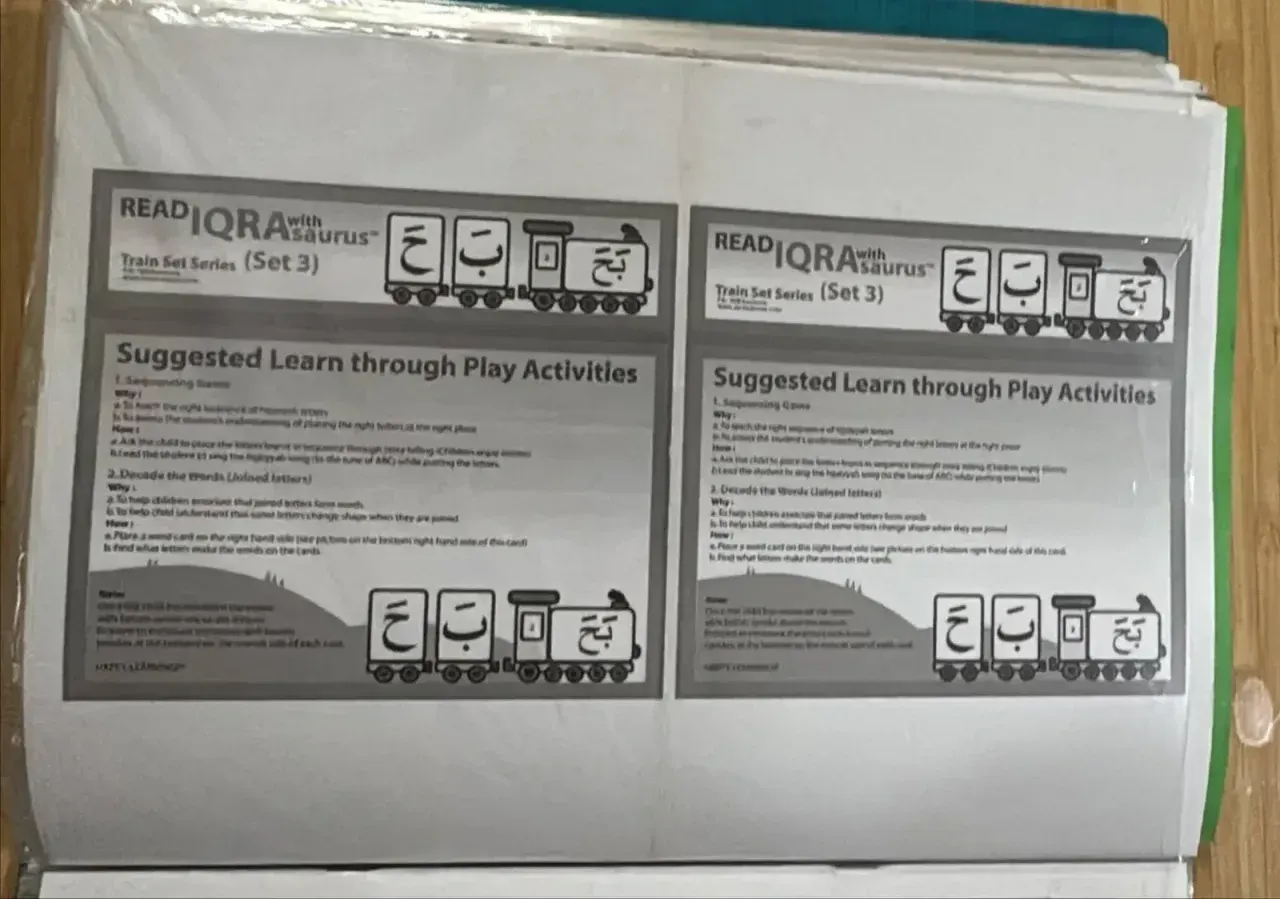
Everything started like this, from the ground up. We printed, cut, played with the children and tried again.
Hijaiyya Hunt, our first book
Later we published our first book, Hijaiyya Hunt. It is dinosaur-based: small dinosaurs walk among the Arabic and Jawi letters on the cover. A band at the bottom sets out what it is for: "Identify Hijaiyyah Letters, Practice Focus, Create Letter Awareness". The cover still carries our older tagline, "inspire . integrate . impart", from the days of the 3-I, before we added Investigate.
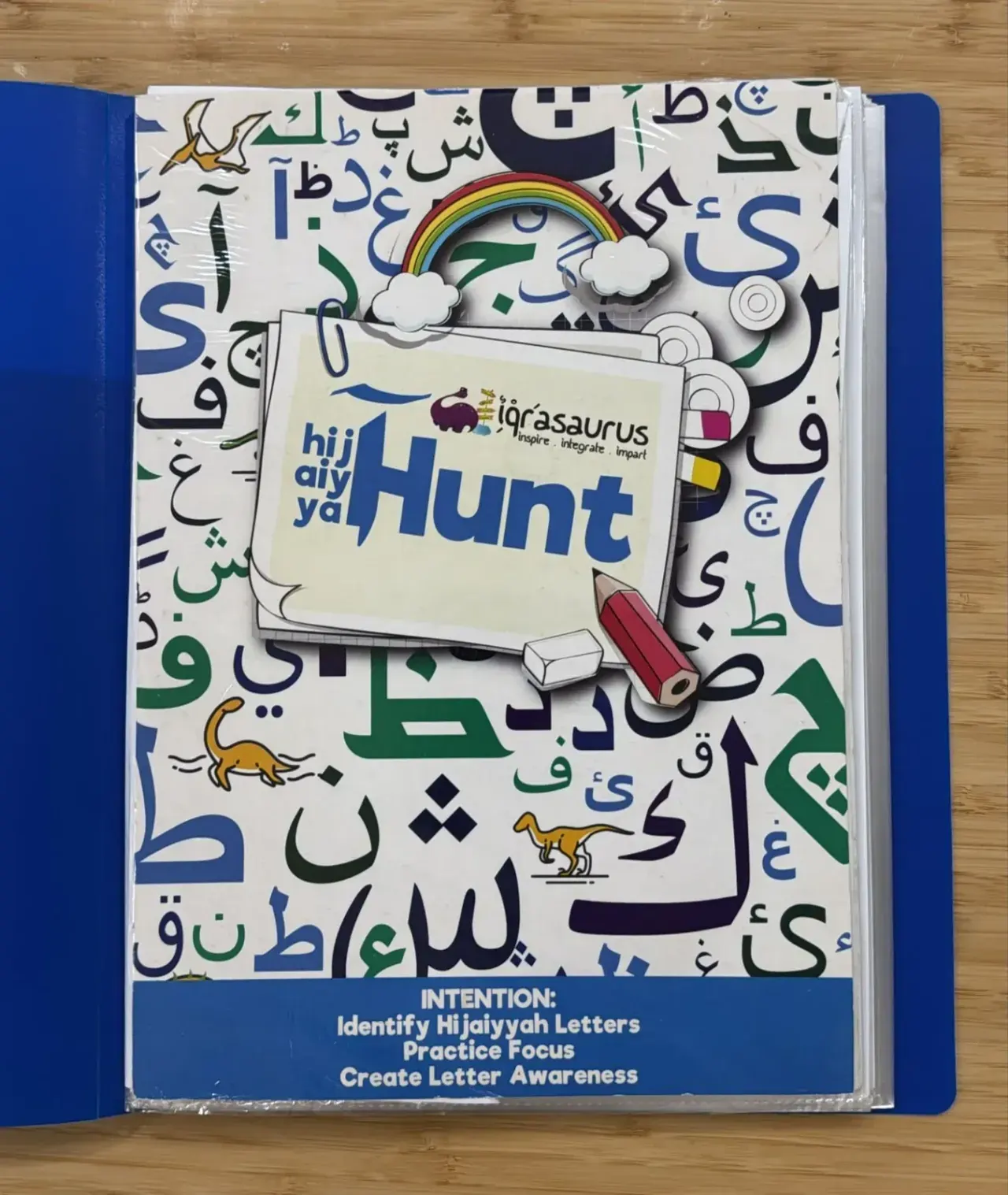
Families loved it. For us, though, it was a logistical nightmare. Every copy had to be printed, stored and delivered.
Why we moved to printables
We thought hard about it and chose a more practical way. We let the printed books go and put our effort into printables and workshops instead. A printable is printed by the family at home, so there are no boxes to store and no parcels to deliver. It also lets us keep prices low, so that as many families as possible can afford them, and anyone who needs something more can contact us directly.
Both ideas are still with us. The letter hunts in the book became our Hijaiyya Hunt printables, and the black-and-white train cards were the starting point for the Iqra Train tool we are working on now.
If you are starting out with your own children, you do not need a printing press. A black-and-white printer, a pair of scissors and a game your child wants to play again are enough to begin.