PartnersFrom the archive
The Juz Amma drafts, surah by surah
A walk through our draft Tadabbur pages for Little Caliphs, lesson plans 1 to 11, from Al-Fatihah to An-Nasr, in colour and in black and white.
Around 2019 we worked with Little Caliphs, a large early-childhood organisation in Malaysia with centres in every state, on Tadabbur pages for the short surahs of Juz Amma. Their teachers wrote the tafsir. We wrote the reflection part.
The finished books are Little Caliphs' own. What you see here are our drafts. There were many rounds of them, and some pages still carry handwritten review notes in blue pen.
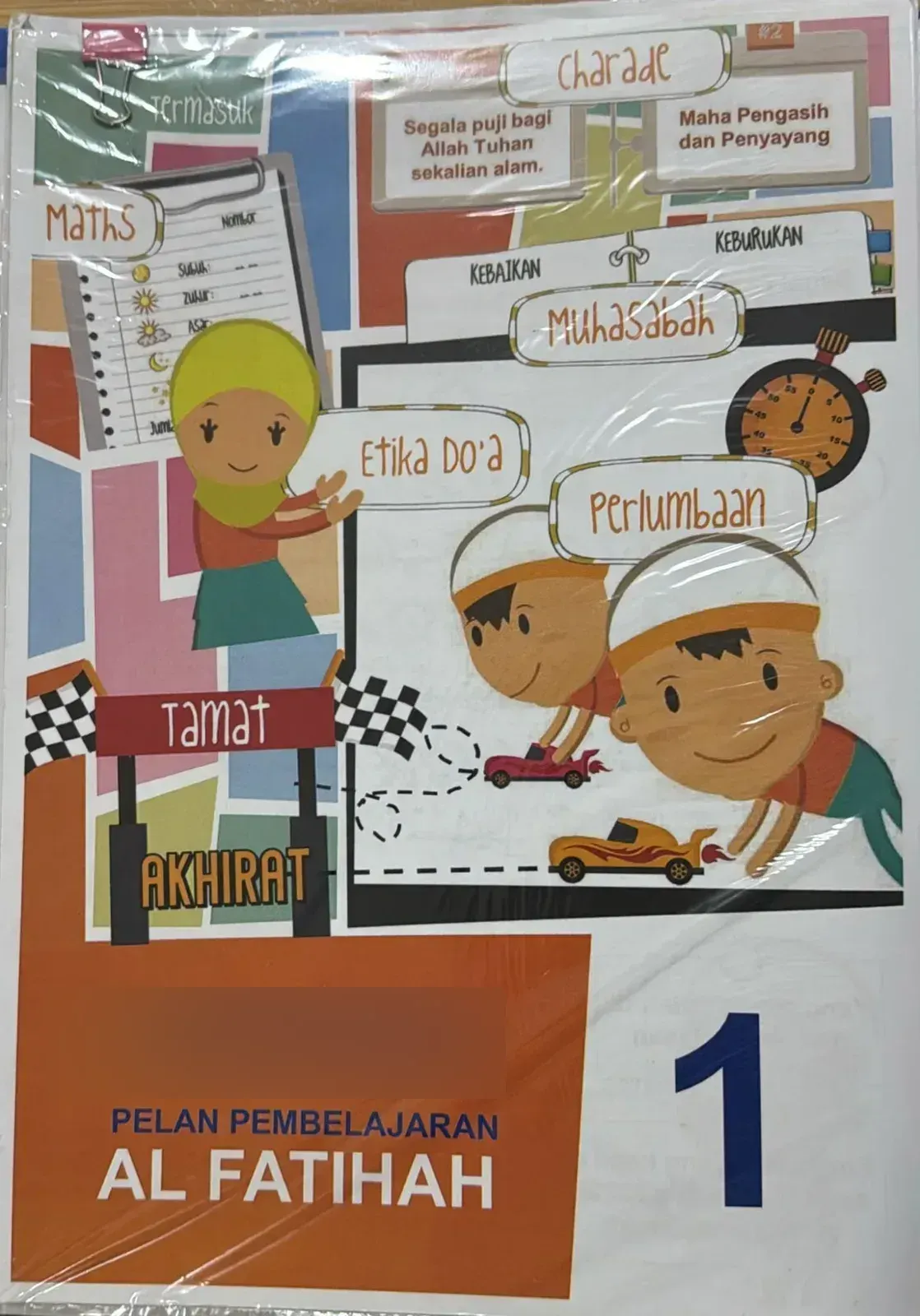
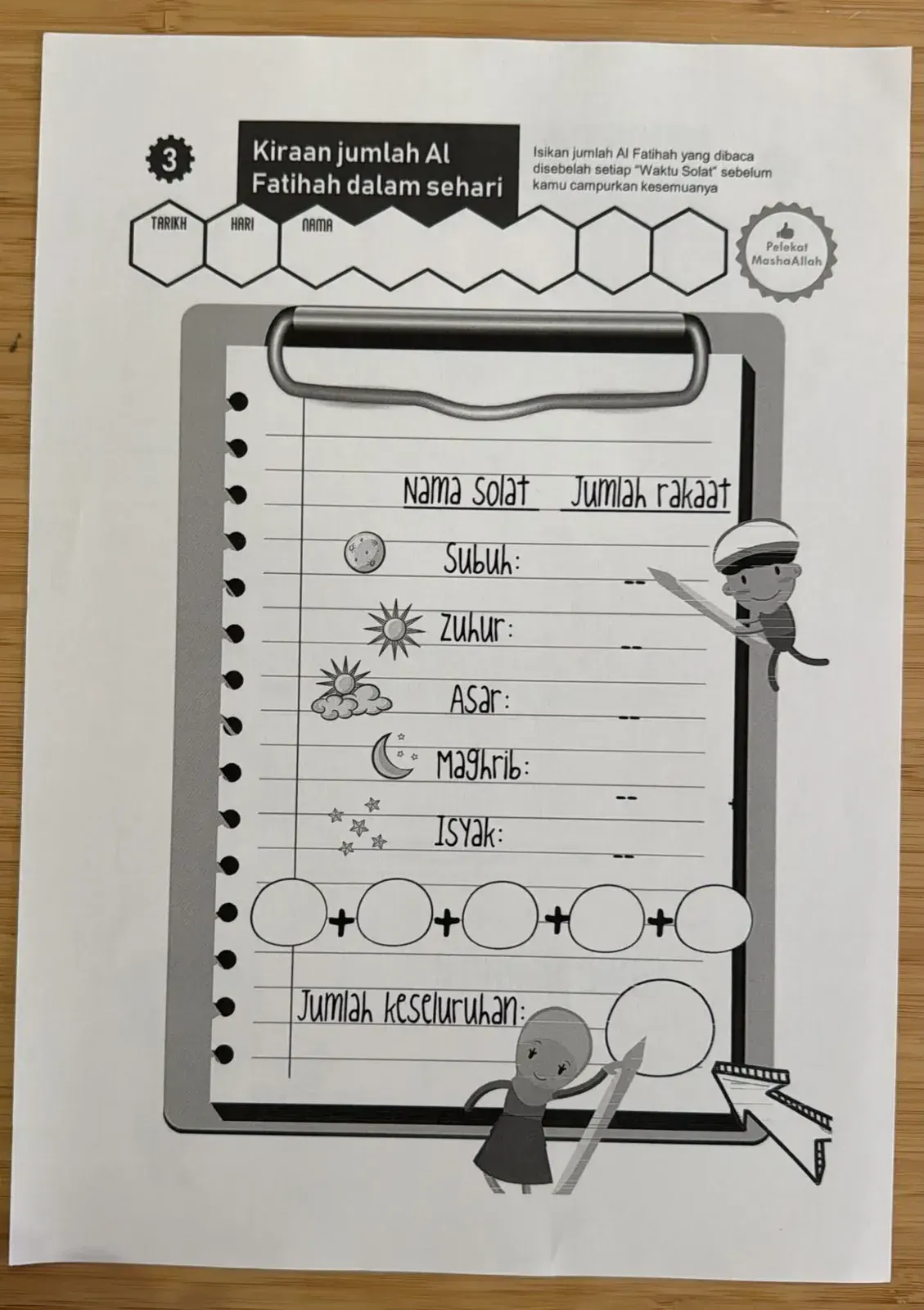
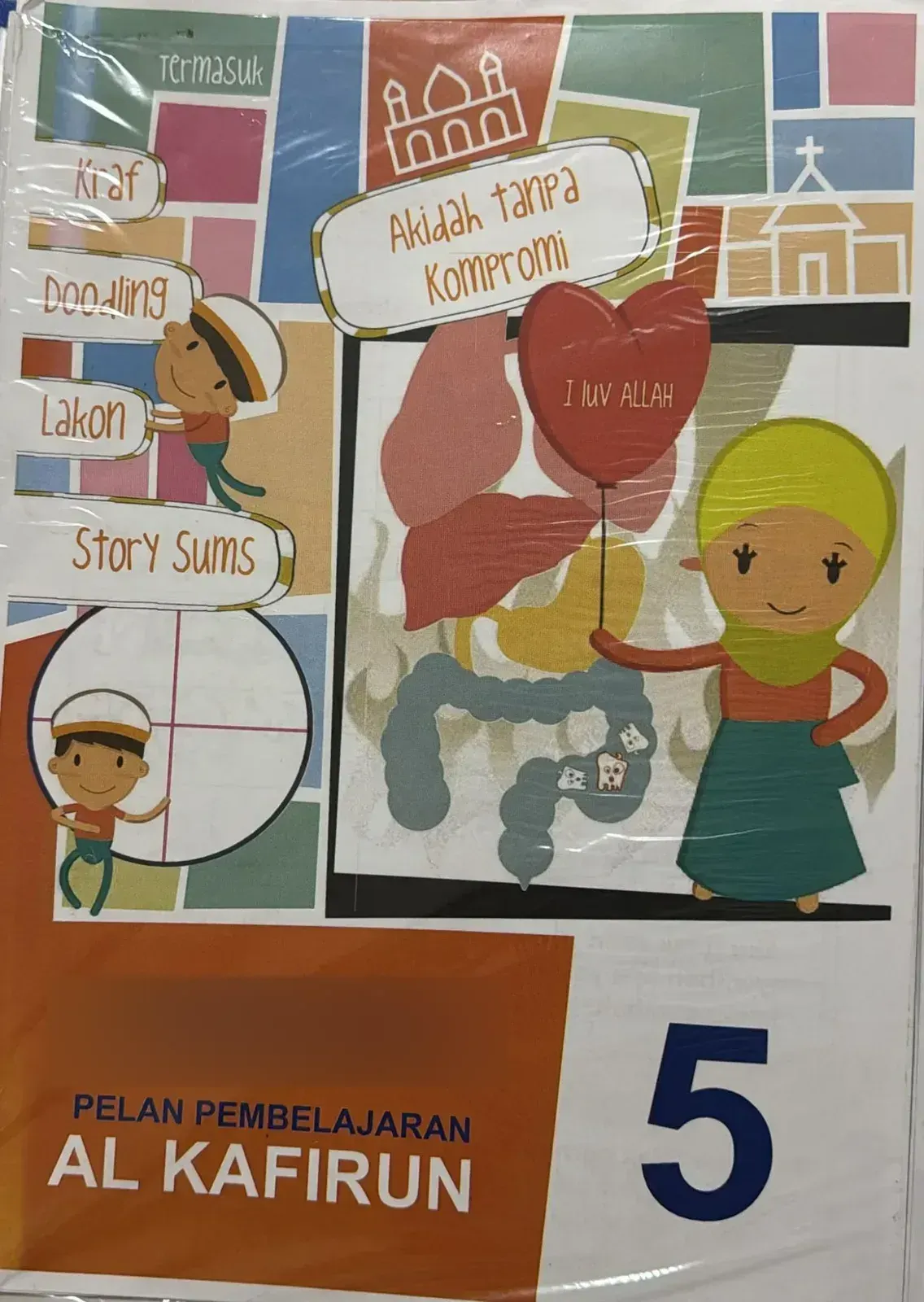
Every lesson plan has a numbered cover and a set of activity pages in Malay, each with boxes for the date, the day and the child's name, and a spot for a "MashaAllah" sticker. The activities change from page to page so that each one suits a different way children learn: matching verse meanings, memorising keywords, the story behind the revelation (Asbabun Nuzul), doodling, crafts, sums, charades, outings and muhasabah, a quiet look at oneself. The pictures are licensed stock art.
1 to 5: Al-Fatihah to Al-Kafirun
Lesson 1, Al-Fatihah, includes a toy-car race, a craft on the manners of du'a, and a page for counting how many times we recite Al-Fatihah in a day.
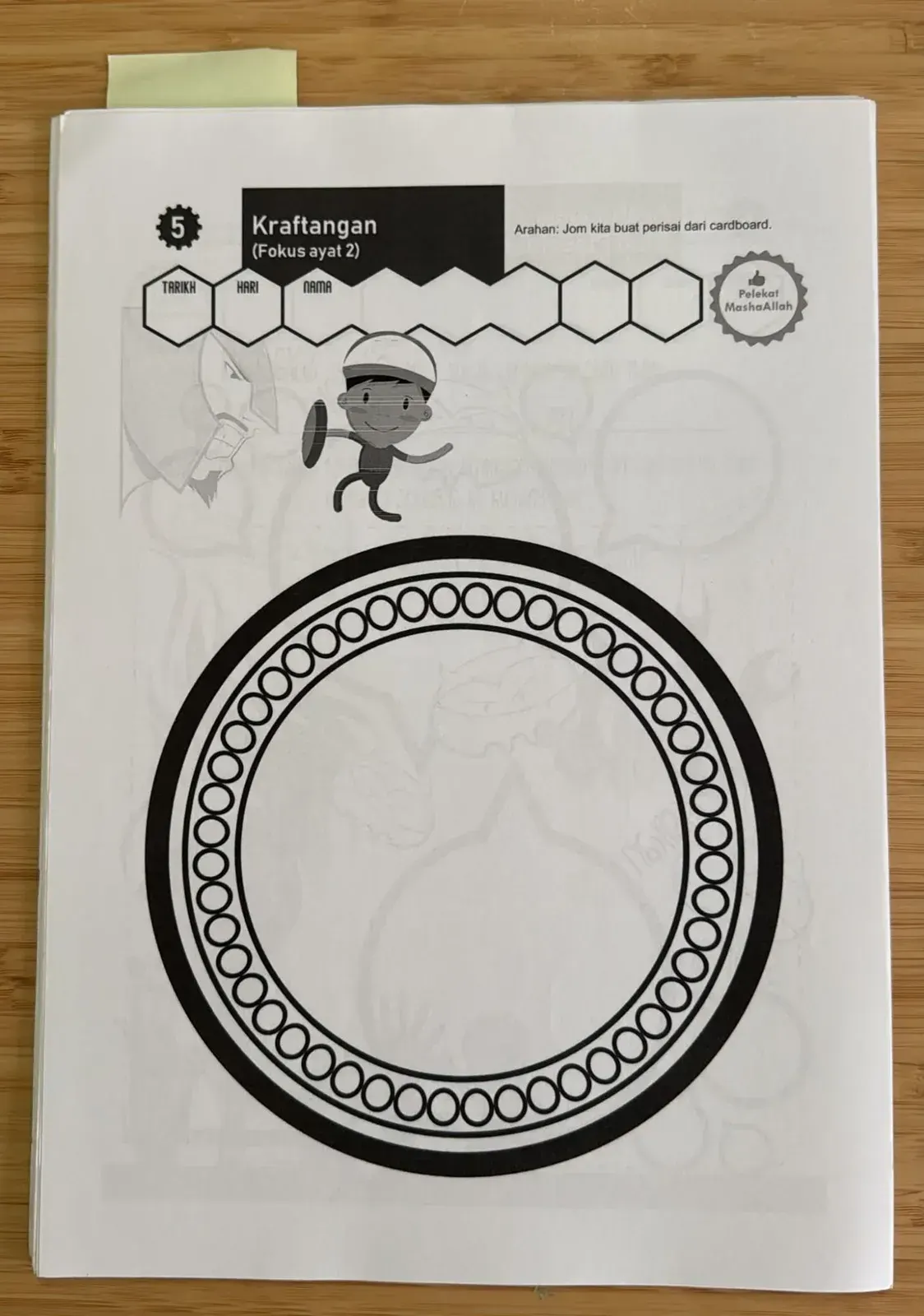
Lesson 2, An-Naas, has a flag page, a crown to doodle and a cardboard shield to make. Lesson 3, Al-Ikhlas, has a comic for the Asbabun Nuzul and a craft wheel.
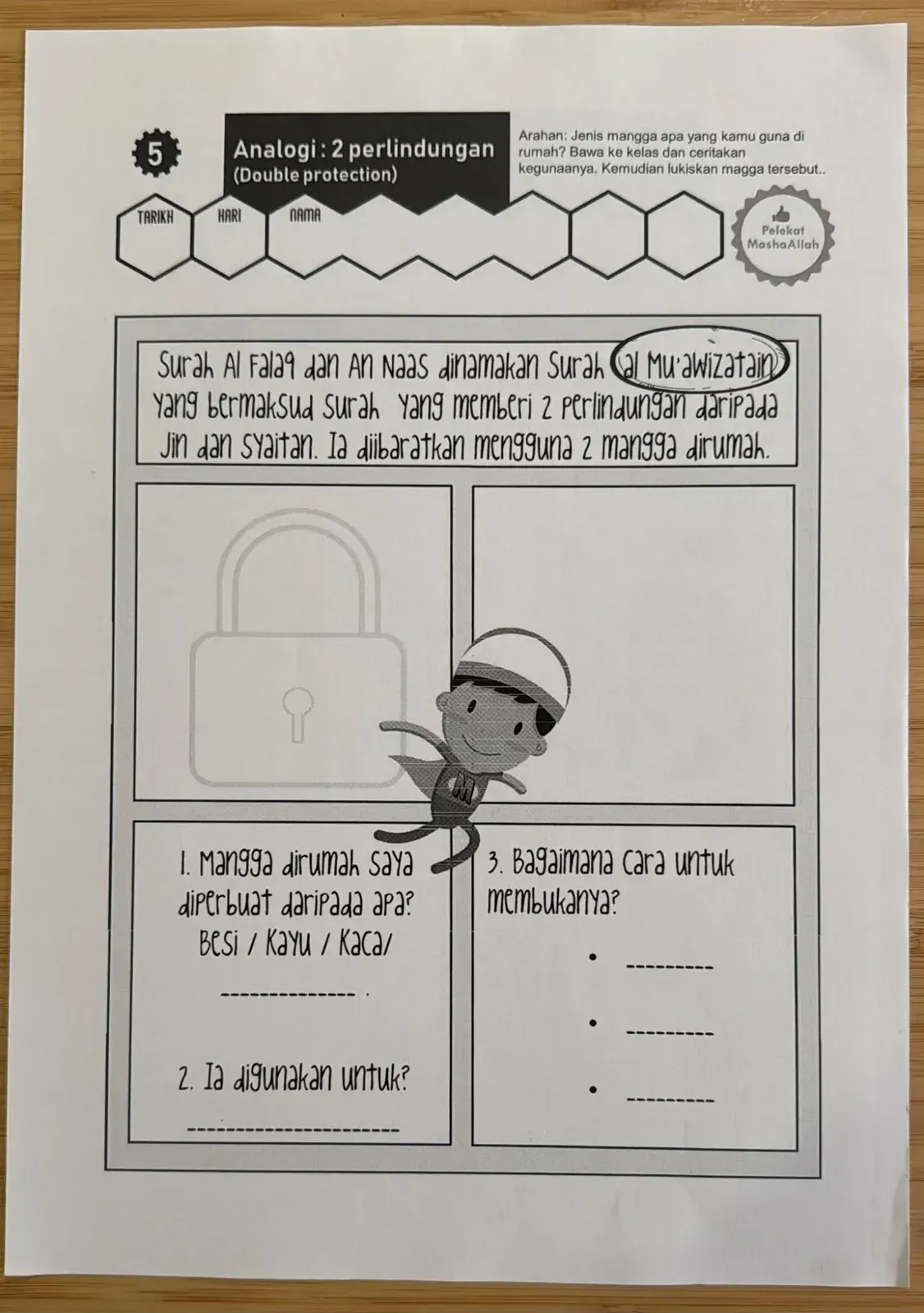
Lesson 4, Al-Falaq, explains two kinds of protection with a pair of padlocks.
Lesson 5, Al-Kafirun, ends with a muhasabah page on respecting people of other faiths.
6 to 11: Al-Kautsar to An-Nasr
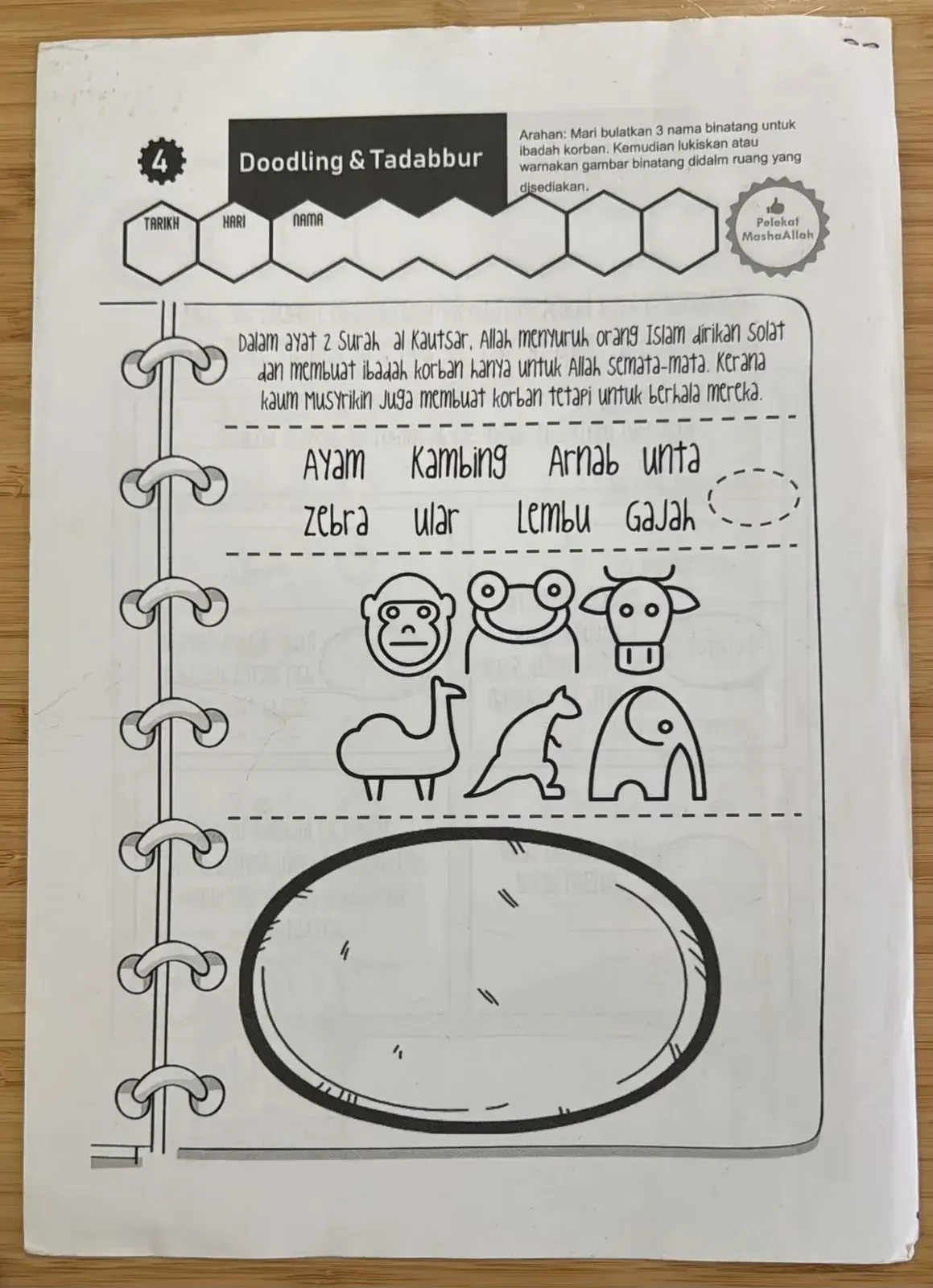
Lesson 6, Al-Kautsar, has a doodling page with animals for korban and a muhasabah page on being grateful.
Lesson 7, Al-Fil, suggests a visit to the zoo and has a science page comparing Asian and African elephants by their ears, heads and tusks.
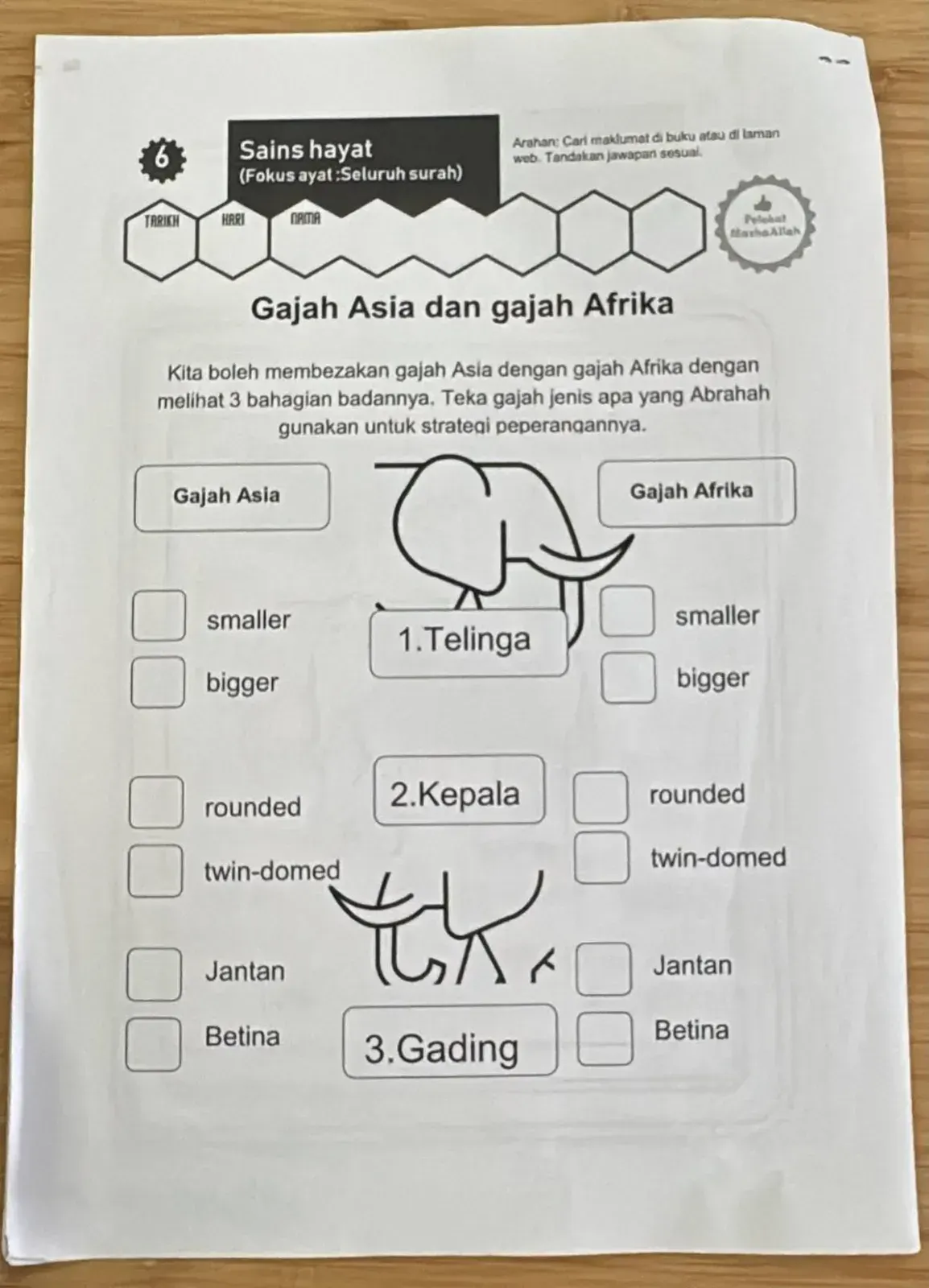
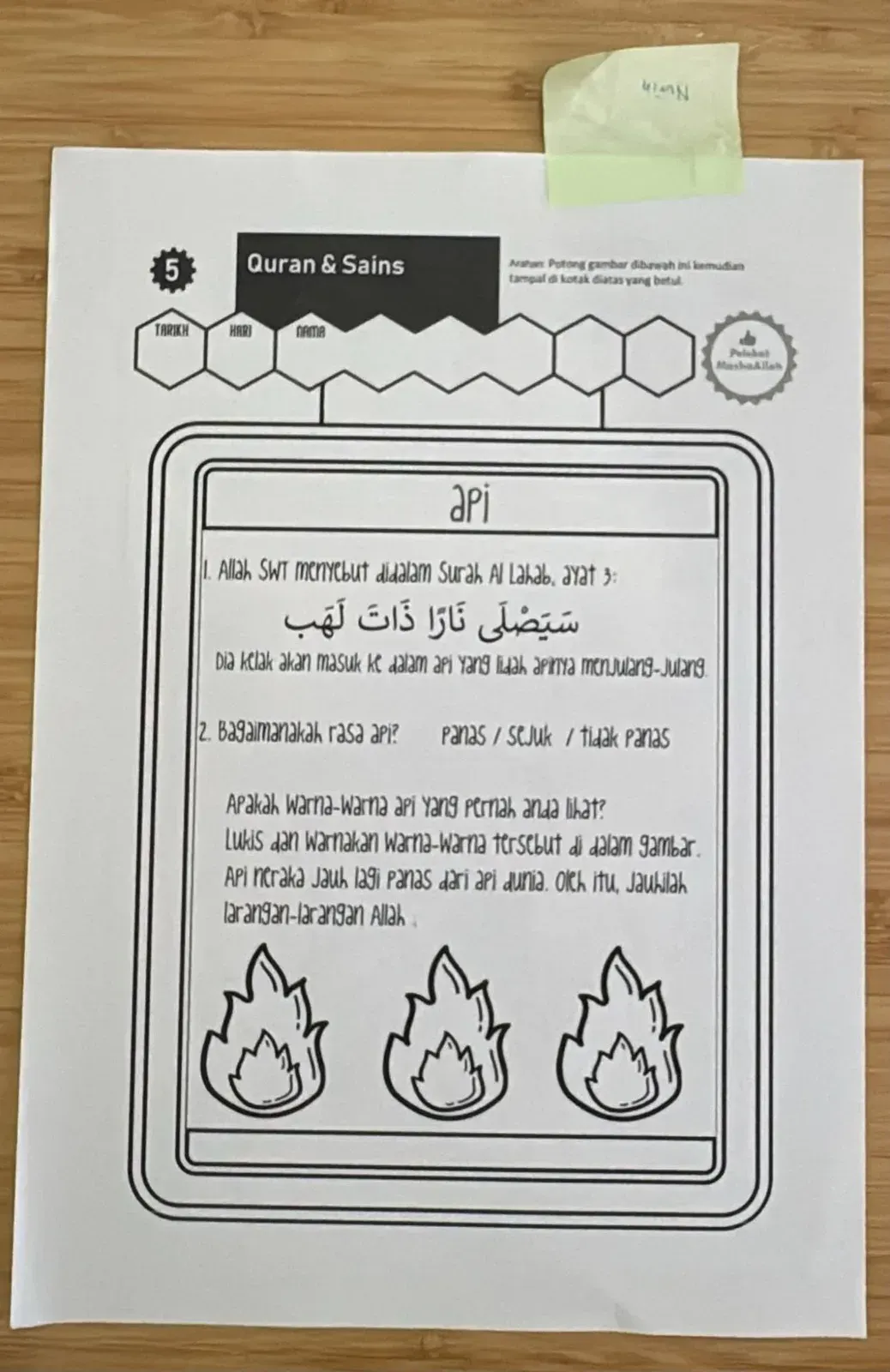
Lesson 8 is Al-Quraisy. Lesson 9 is Al-Masad, which is titled Al-Lahab on its colour cover; it has a Quran and science page about fire.
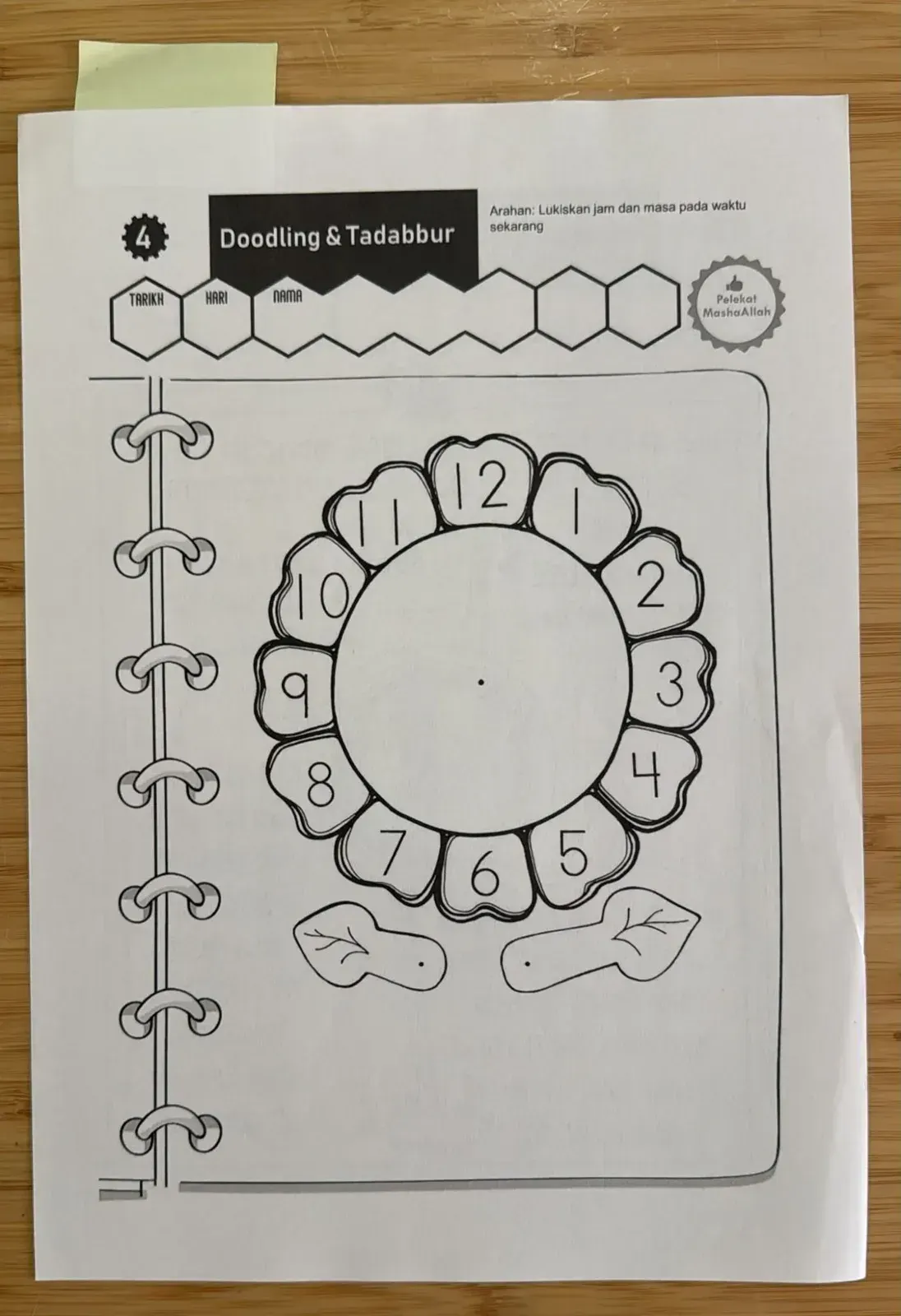
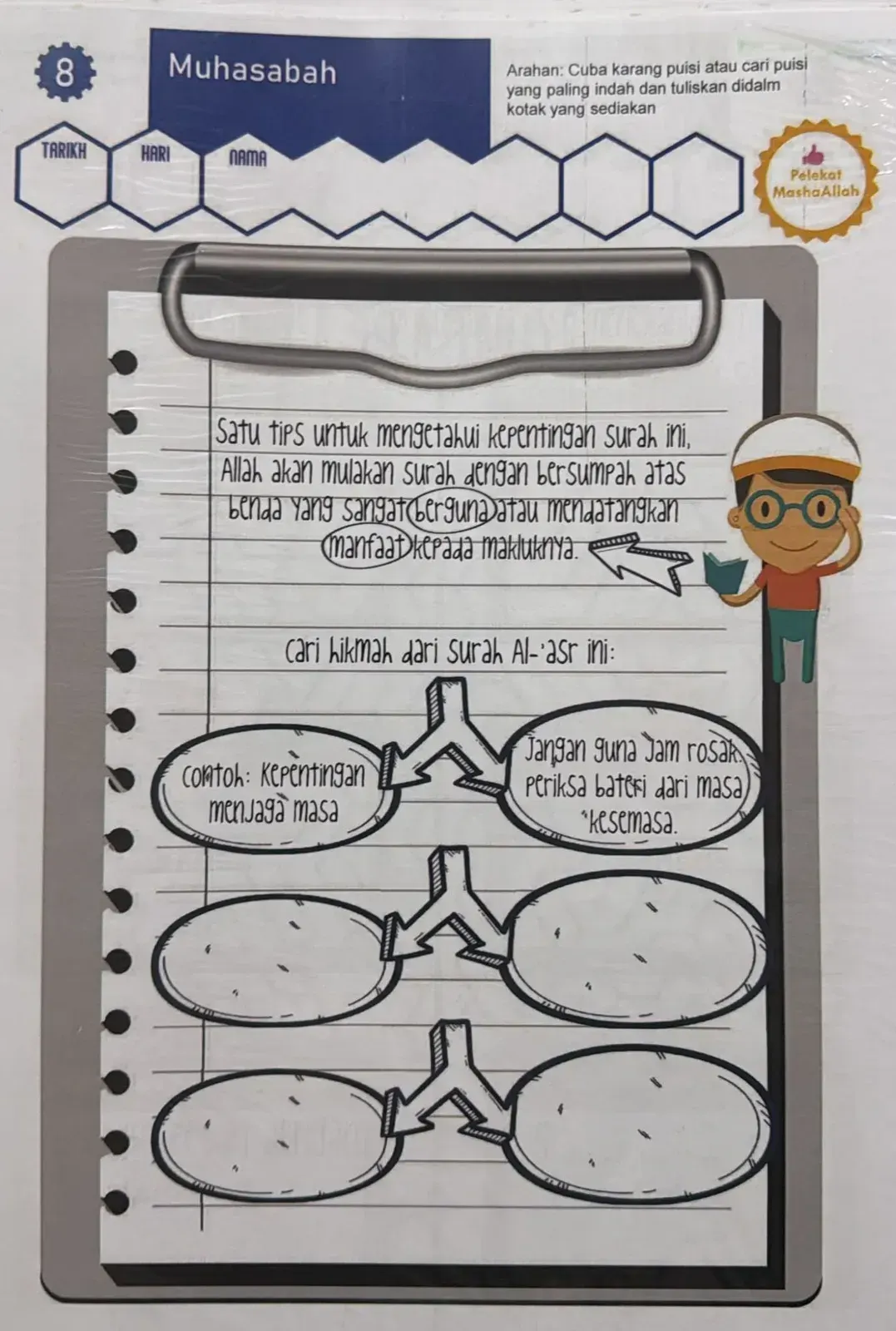
Lesson 10, Al-Asr, has a clock face to doodle, a visit to a clock shop, and a colour muhasabah page that warns against using a broken clock.
Lesson 11, An-Nasr, closes the series.
What the drafts show
Some pages were printed in colour and laminated. They were our attempt to make the pages bright and engaging while still carrying the message accurately and positively. They never went to print in this form. The black-and-white sets are photocopies of the colour ones.
For us, this was research. It was a highly multifaceted approach, with every page a different layout and a different way in, and it came before the 4-I. Investigate, with more critical thinking and more science, came later as our extension of the 3-I.